

The first hockey-equipment shop can feel like somebody handed you a small child, a large cart and a vocabulary test. Breezers are pants, socks are not really socks, and a neck guard is somehow the one item that can vanish while everyone is looking directly at it. The good news is that the list is manageable once you separate required protective gear from the little extras that simply make rink life easier. Below is the complete youth hockey equipment list, plus a plain-English look at youth versus junior sizing and what packaged equipment sets actually include.
Youth hockey equipment list: the quick checklist
This checklist is for ice-hockey skaters. Goalies need position-specific equipment and fitting. Confirm required certifications and any additional mouthguard or team requirements with your association.
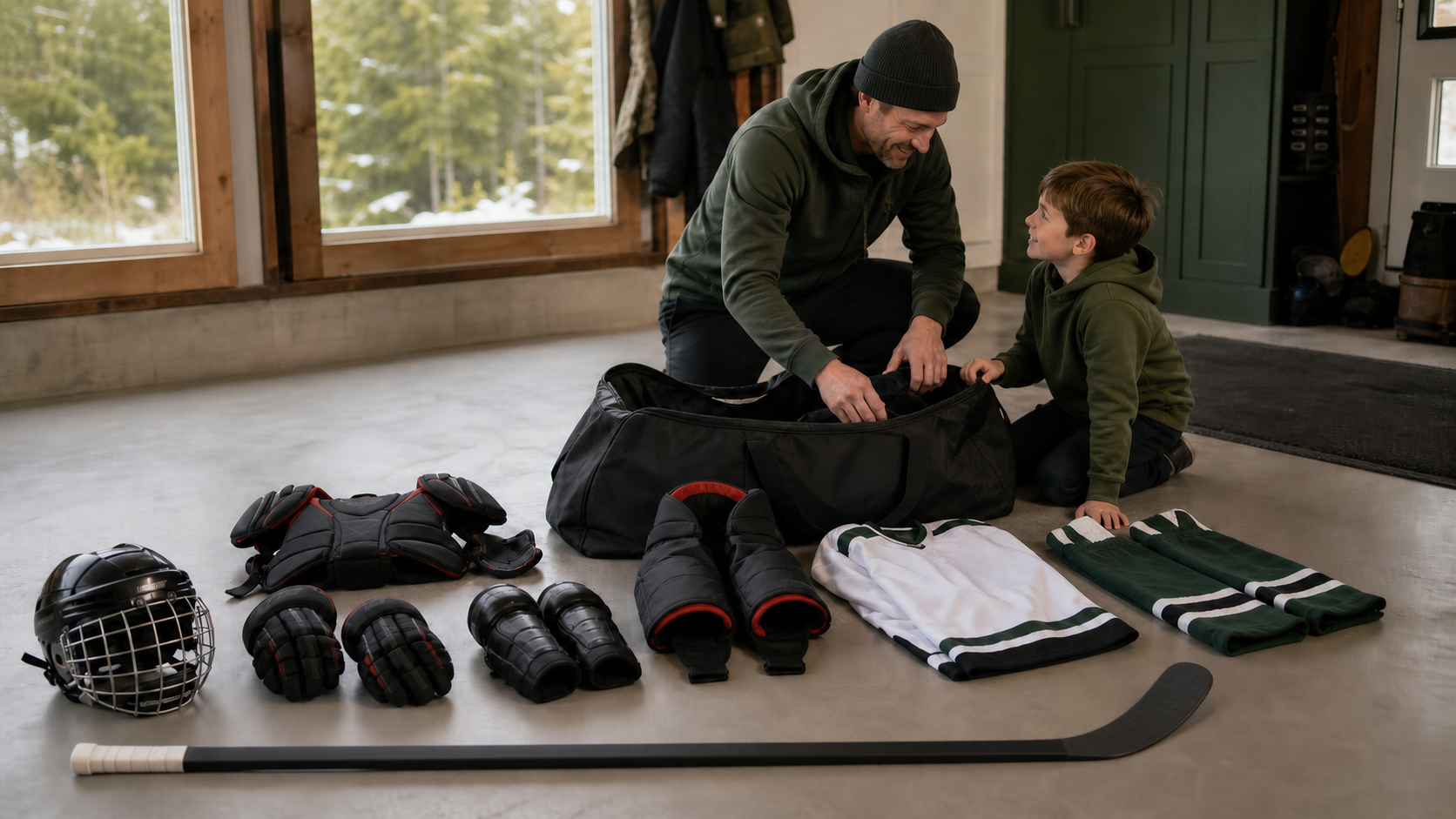
- Helmet with full face protection; required neck protection
- Shoulder pads, elbow pads and hockey gloves
- Hockey pants, protective cup or pelvic protector, and shin pads
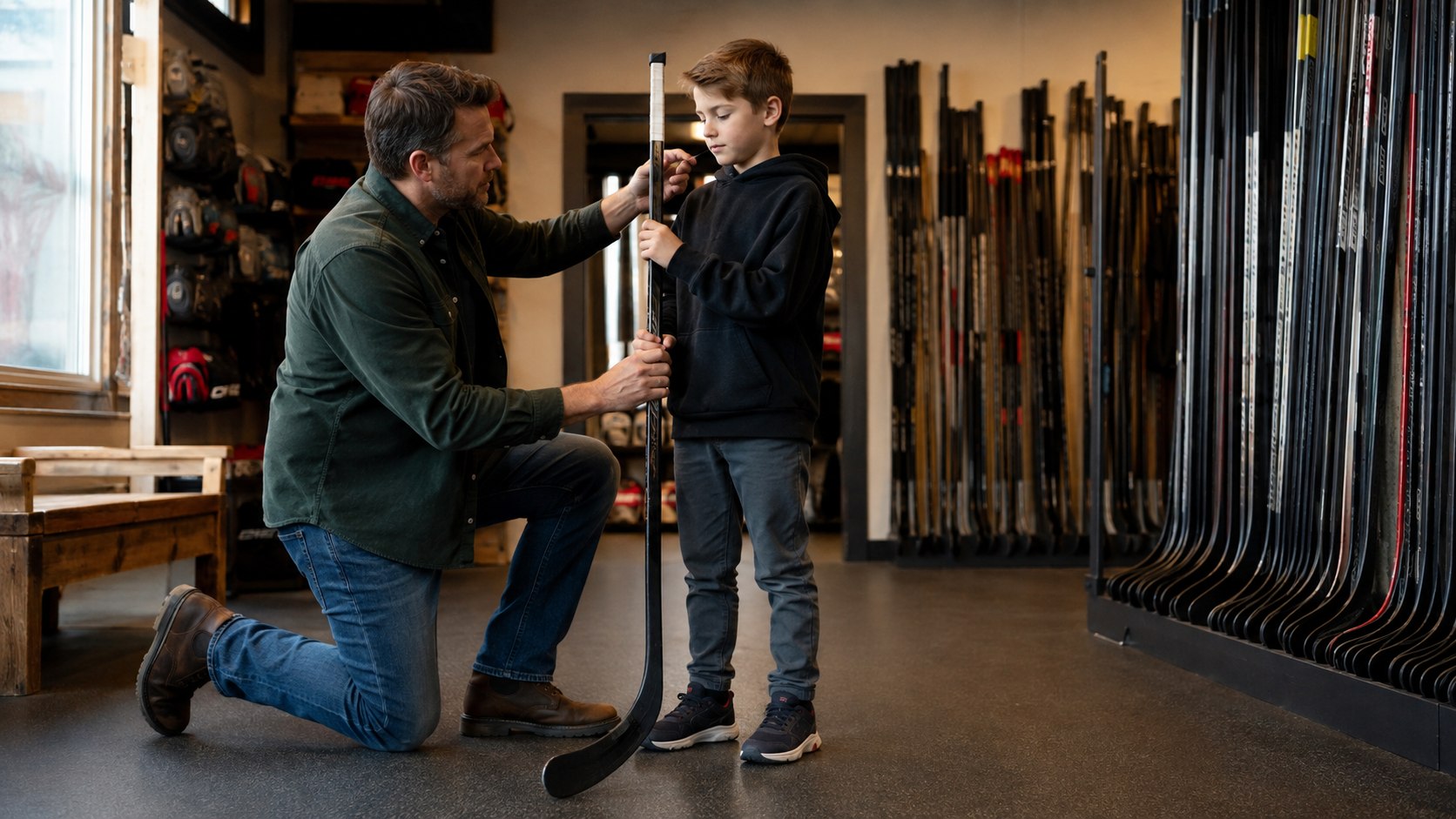
- Properly fitted hockey skates and an appropriately sized stick
- Team jersey, hockey socks and comfortable base layers
- Hockey bag, water bottle, skate guards, tape and spare laces
Start with fit, not the brand wall
A beginner does not need the most expensive equipment in the store. They need equipment that covers the right places, stays in position and lets them move without fighting it. Use our head-to-toe youth hockey equipment fit guide to check each piece before buying it several sizes too large.
Have the player try pieces on together when possible. Shoulder pads meet elbow pads, elbow pads meet gloves, hockey pants meet shin pads and shin pads meet the skate tongue. Those overlaps matter more than whether every piece belongs to the same product line. Ask a qualified hockey retailer or your local association to help with fitting when you are unsure.
Youth vs junior hockey equipment: size the player, not the age
Youth and junior are product size ranges, not playing levels. Junior hockey equipment, often labelled “JR” or “jr hockey equipment” in store listings, generally covers larger players than youth equipment. A child can need youth gloves and junior shin pads at the same time. Youth small is not interchangeable with junior small.
Use the chart for the exact brand and model. Measure the body area that chart asks for, then try the equipment together. Height alone cannot choose every piece, and skate sizing is not the same as shoe sizing. Check reach, knee bend and protective overlap while the child holds a stick. Avoid choosing a larger size just to stretch another season from it.
Is a full youth hockey equipment set worth buying?
A youth hockey equipment set can simplify the first shopping trip, but “complete” may mean only a protective-pad bundle. Compare the contents line by line with the checklist. Helmet and cage, skates, stick, neck guard, pelvic protection, jersey and socks may need separate purchases.
A bundle is good value only when every included piece fits. If the pants fit but the elbows slide, price the pieces separately or ask whether substitutions are possible. Check the return policy before removing tags. Association loan kits can be another starting point; ask what is included, what deposit is required and when the gear must be returned.
How much does a first equipment setup cost?
For planning in Canadian dollars, allow roughly $400–$700 for a value-focused setup mixing suitable used pieces with new essentials, or about $700–$1,200 for an entry-level mostly new setup. These are editorial budgeting allowances, not surveyed averages or retailer quotes; tax, local availability, size and replacement needs can move the total outside them. Goalie equipment is a separate budget.
Build a basket for helmet and cage, skates, protective pads and gloves, stick, neck and pelvic protection, clothing and bag extras. A protective kit price is only one part of that total. Borrowing well-fitting equipment can reduce the first purchase; premium sticks and higher-end skates can increase it quickly.
For registration, team expenses and travel beyond the gear bag, use the complete Canadian youth hockey budget guide.
Beginner vs competitive gear: what actually changes?
Beginners need comfortable, correctly fitted protection and a manageable stick. Competitive players may put more hours of wear on gloves, skate steel and sticks, so durability, repairability and a practical spare can matter more. A team label alone is not a reason to replace a safe, well-fitting setup.
Ask the fitter about construction and coverage for the player’s activity and league rules. Upgrade to solve a specific problem, such as worn palms or damaged gear, rather than buying an entire premium matching set.
The required gear, from helmet to skates
Your association is the final word on current requirements, but a typical youth player needs the following set. Keep this list open during the fitting and check each item off only after the player can move comfortably in it. For the one item with its own language of length, flex and curves, use our youth hockey stick guide.
- Certified hockey helmet with properly fitted face protection
- Neck protection as required by the association
- Shoulder pads and elbow pads with no large coverage gaps
- Hockey gloves that meet the elbow pads and still allow a good grip
- Hockey pants with a protective cup or pelvic protector
- Shin pads that fit securely under hockey socks
- Properly fitted hockey skates
- Jersey and hockey socks in the team's required colours
- An appropriately sized hockey stick with the correct handedness
- Hockey bag large enough for the gear without needing a loading diagram
Used gear can be a great deal—when it still does its job
Kids grow quickly, which means the used market is full of pants, shoulder pads, elbow pads, shin pads and gloves that may have plenty of life left. Inspect every piece for cracks, broken fasteners, compressed padding, strong odour that will not wash out and anything that prevents a secure fit.
Helmets and skates deserve more caution. Check the helmet's condition and current certification, and do not use one that is cracked, altered or missing parts. Skates need to support the foot without painful pressure or excess room. If you are new to hockey, this is where an experienced fitter earns their coffee. Once they fit, use our youth hockey skate-sharpening guide to keep the edges on a simple family schedule.
What can wait until the player actually wants it
The hockey world is very good at producing things that look essential while you are standing under bright retail lights. A first-year player can usually skip the premium stick, multiple specialty bags, expensive blade-care systems, backup gloves and a home-training collection large enough to require its own room.
Let the child play for a while. They will develop preferences about gloves, sticks, laces and how they carry their bag. Spending slowly also leaves room in the budget for the youth hockey costs nobody puts on the first shopping list: sharpening, registration, team fees and the snack somebody announces they need four minutes before practice.
The small bag extras that save surprisingly big headaches
Once the fitted equipment is handled, a few inexpensive extras make the weekly routine easier. They are not a reason to rebuild the shopping cart; they are simply the things parents end up borrowing in the dressing room if they forget them.
- A squeeze bottle with a long spout that works through a cage
- One roll of stick tape and clear shin-pad tape
- Spare skate laces in the correct length
- Skate guards or absorbent soakers for travel
- A mesh bag for damp base layers and socks
- Name labels on every item that can walk into the wrong bag
- A small towel for blades and wet benches
- Stick wax only if the player finds it useful
Pack the bag in dressing order
A repeatable bag layout reduces the game-day equipment avalanche. Put base layers and the protective cup where they come out first. Group shin pads and hockey socks, keep skates together in their normal spot and place the helmet where the cage will not crush smaller items.
Give tape, spare laces and the towel one small pouch. The water bottle should have one permanent pocket too. The goal is not military precision; it is making the missing item obvious before the car leaves the driveway.
The ten-minute after-practice reset
Open the bag as soon as you get home. Air out the protective pieces, remove damp base layers, wipe the skate blades and let the skates dry with their soakers off. Our guide to washing hockey gear at home explains what can be washed, what should be cleaned by hand and why airflow matters more than owning a complicated system.
If your floor still disappears under pads, our guide to hockey gear drying racks for one or two players compares freestanding, wheeled and portable setups.
Clean the water bottle after practice, let it dry and put it back in the hockey bag so it is not left on the counter for the next departure. Repack the gear after it is dry. This small routine is much easier than discovering a closed wet bag five minutes before the weekend game.
Questions worth asking during the first fitting
Bring the player, hockey socks and any equipment you already own. Ask the fitter to show you how each piece should sit, how to check helmet and skate fit at home and which adjustments are normal as the child grows.
Confirm what the local association supplies, what colours the team requires and whether there is an equipment-loan or exchange program. The best shopping trip is often the one that ends with fewer items than the original list.
- Does this piece cover the intended area when the child bends and reaches?
- Can the child move, grip the stick and get up from the floor comfortably?
- Is the helmet currently certified and complete?
- Are these skates the right width as well as the right length?
- Which pieces does the association provide or require?
- What should we recheck if the child grows during the season?
Outgrown or worn out: when to replace youth hockey gear
Check fit before the season, after a growth spurt and whenever the player reports discomfort. Recheck coverage during the season, especially when one adjacent piece changes size. Do not wait for the next birthday or division change.
Replace or professionally assess cracked shells, loose or damaged fasteners, torn straps, compressed padding and broken protective parts. Follow helmet manufacturer instructions after an impact and check certification markings and applicable service-life guidance. Used skates can be suitable when fit, boot support, blades and holders pass inspection.
- New is the simplest choice for a helmet when its impact history is unknown; buy properly fitted, certified protection.
- Consider new base layers and personal pelvic protection for hygiene and fit.
- Used pants, pads, gloves and bags can save money when clean, intact and correctly fitted.
- Replace only the pieces that need it; never trade protective coverage for growing room.
Parent extras that earn their space
Keep a small repair pouch with tape, spare laces and labels, plus a towel and somewhere to separate wet clothing. For the parent, warm layers, a reusable drink container and a simple packing routine are usually more useful than another large bag.
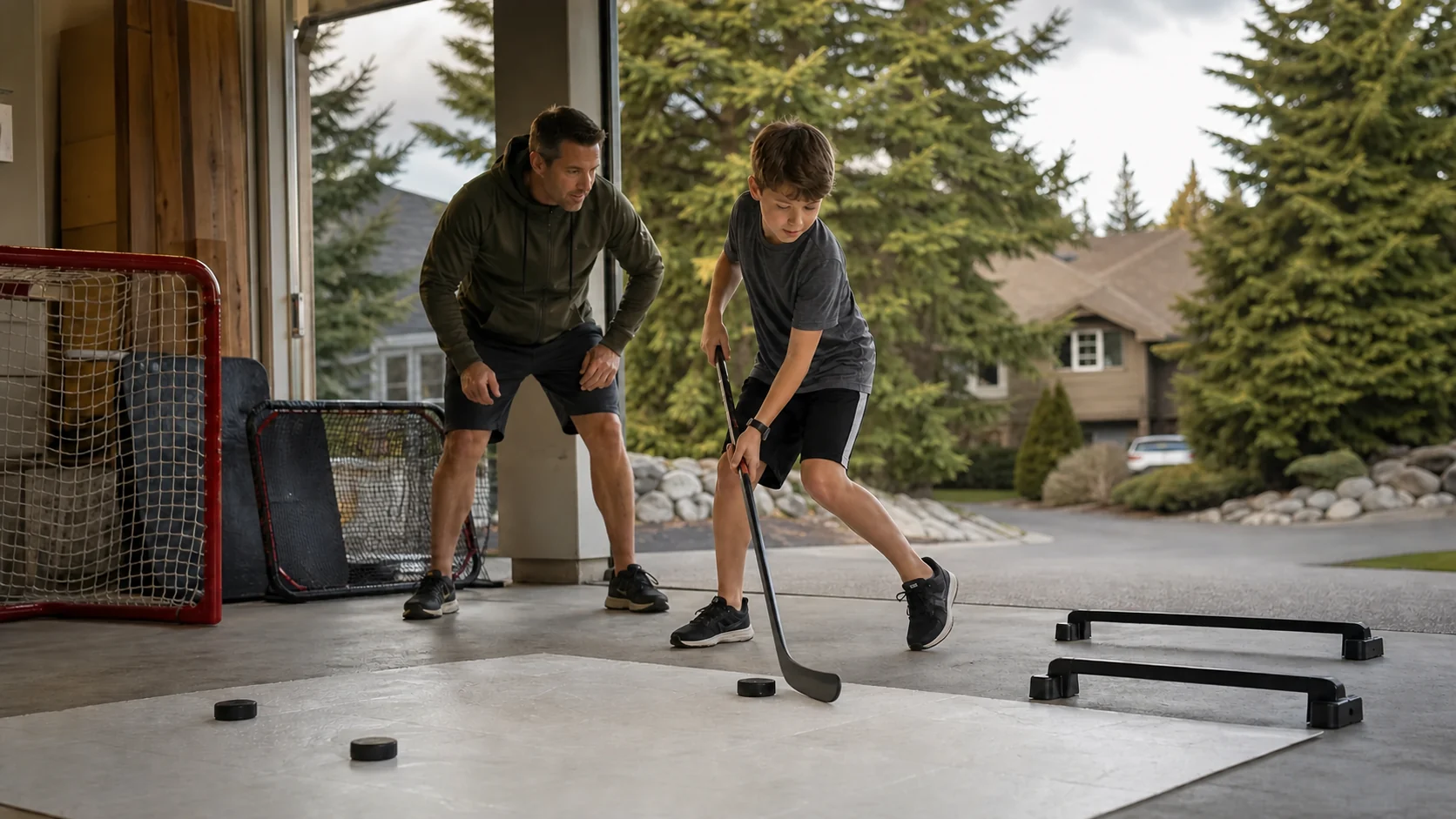
Pair the bag check with the calm game-day routine, plan meals with the young athlete fueling guide, and use the tournament survival guide for weekends away. For practice between ice sessions, start with off-ice hockey training at home.
Save or print
Print this: first-season youth hockey equipment checklist
- Required fit: certified helmet and face protection
- Required fit: neck protection required by the association
- Required fit: shoulder pads, elbow pads and gloves
- Required fit: hockey pants and protective cup or pelvic protector
- Required fit: shin pads and properly fitted skates
- Team gear: required jersey and hockey socks
- Player gear: appropriately sized stick in the correct handedness
- Bag basics: hockey bag, base layers and clean water bottle
- Useful extras: stick tape, clear tape and spare skate laces
- Useful extras: skate guards or soakers, towel and mesh wet-gear bag
- Parent sanity: label every loose piece of equipment
- Can wait: premium stick, duplicate gear and specialty training gadgets